
 Call: (+1) 571-888-5202
 Mail: [email protected]
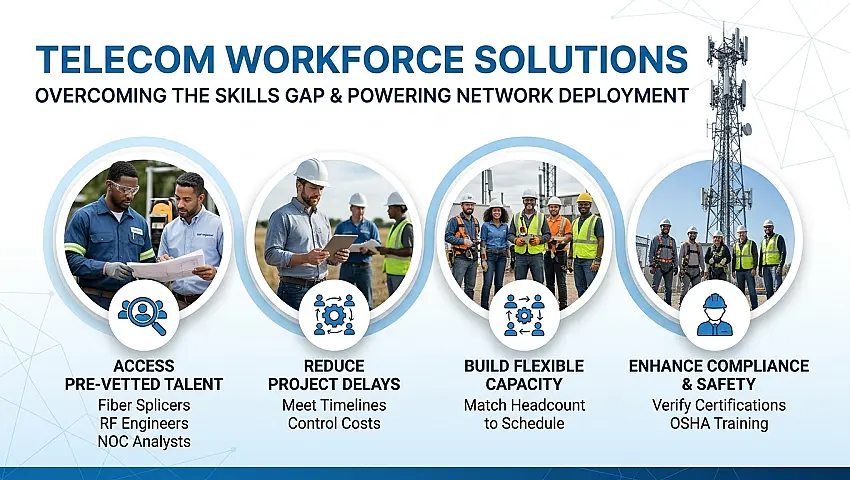
Quick answer: Telecom workforce solutions are flexible staffing models, including contingent staffing, direct hire, project-based teams, and managed services. They give carriers, tower companies, and network contractors fast access to pre-vetted technicians and engineers. They reduce project delays, control hiring costs, and keep deployments compliant when the local talent pool can’t keep up with demand.
Network buildouts are moving faster than the workforce behind them. Fiber-to-the-home, 5G densification, small cell deployments, and rural broadband programs all need field-ready people at the same moment. The talent supply is not growing at that pace.
Several pressures are converging:
The result is longer time-to-fill, rising labor costs, and project timelines that depend on one thing: how quickly you can staff.
Telecom workforce solutions are a set of staffing and talent delivery models built specifically for network infrastructure work. A specialized partner sources, screens, deploys, and often manages technical talent on your behalf.
Roles typically covered include:

A partner with an active pool of pre-screened technicians can often submit qualified candidates in a fraction of the time an internal search takes. That matters when permits, funding windows, or customer commitments are on the clock.
Credentials in this industry are not optional. Good partners confirm tower climbing and rescue training, OSHA safety certifications, fiber testing experience, and equipment-specific knowledge before anyone reaches a site.
Telecom work is project-driven. Contingent workforce models let you match headcount to the build schedule instead of carrying idle payroll between phases.
Payroll, worker classification, insurance, background checks, and multi-state requirements can be handled by the staffing partner, reducing exposure for your team.
Modern sourcing platforms use AI to surface passive candidates, match skills to job requirements, and shorten screening cycles. Paired with recruiters who understand the field, this finds talent that job boards often miss.
Filling the role is only half the job. Technicians who face unpredictable schedules, late per diem, or unclear site expectations don’t come back for the next project. Strong workforce partners help by:
Reliable crews who return project after project are one of the most valuable assets in network deployment.
Use this checklist when evaluating providers:
Be cautious of any provider that promises instant results for every role. Scarce skills are scarce for everyone, and a transparent partner will say so.

What are telecom workforce solutions?
They are staffing and talent delivery models designed for telecom infrastructure work. Providers source, vet, and deploy skilled professionals, such as fiber technicians, RF engineers, and tower crews, through contingent, direct hire, SOW, or managed service arrangements.
Why is there a skilled labor shortage in telecom?
Experienced workers are retiring, training pipelines are limited, the work involves heights and travel, and industries like data centers and energy compete for the same skilled trades. Rapid growth in 5G and fiber deployment has increased demand further.
How quickly can a telecom staffing partner provide technicians?
For common roles, qualified candidates can often be presented within days when a partner maintains an active talent pool. Niche specialists, such as senior RF engineers, take longer, so sharing timelines and requirements early helps.
Is telecom staffing only for large carriers?
No. Regional contractors, tower companies, ISPs, and equipment vendors also use workforce solutions, especially for short-term projects and seasonal surges.
What is the difference between contingent staffing and direct hire in telecom?
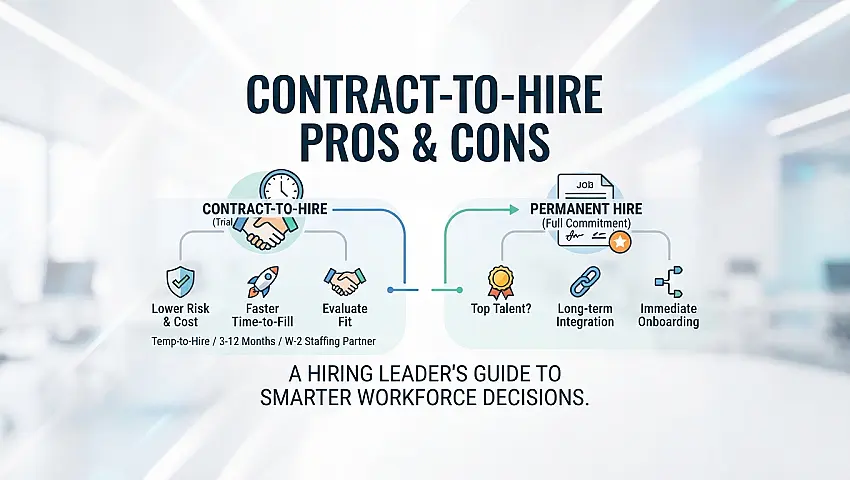
Contingent staffing places workers on a temporary or project basis, which suits buildouts and upgrades. Direct hire fills permanent roles, which suits long-term engineering, management, and operations needs.
Who is responsible for safety on a telecom job site?
Responsibility is usually shared. The staffing partner verifies training and certifications, while the client or prime contractor controls site conditions, equipment, and supervision. Define these duties in the contract.
How does AI improve telecom recruiting?
AI can match skills and certifications to job requirements, identify passive candidates, and reduce screening time. Human recruiters then validate fit, availability, and expectations before submission.
What should I ask before signing a staffing agreement?
Ask for similar project examples, screening steps, replacement guarantees, insurance coverage, and client references. A short pilot project is a good way to test the fit.
Don’t let talent gaps slow down your network buildout. PeopleNTech combines AI-enabled talent sourcing with specialized recruiters to deliver skilled telecom professionals across the US and Canada. We’re an NMSDC-certified Minority Business Enterprise.
📞 Call: (+1) 571-888-5202
✉️ Email: [email protected]
🌐 Visit: www.peoplentech.com

https://www.peoplentech.com/book-a-meeting
.webp)
.webp)